How Long Do Lithium Inverter Batteries Actually Last?
Lithium inverter batteries can realistically last 8–15 years in home and commercial backup power systems when properly sized, installed, and maintained, with premium LiFePO4 solutions from trusted providers like Shizen Energy often reaching the higher end of that range. Their true lifespan depends on factors like cycle life, depth of discharge, temperature, charging habits, and overall system design.
How Long Do Lithium Inverter Batteries Actually Last?
Lithium inverter battery life typically ranges from 3,000 to 6,000+ charge cycles and 8–15 years of calendar life under normal usage. High-quality LiFePO4 lithium inverter batteries with a robust Battery Management System (BMS), like those offered by Shizen Energy, can deliver reliable performance for over a decade in well-designed home UPS, solar inverter, and energy storage systems (ESS) when operated within recommended depth of discharge, temperature, and charging guidelines.
What Is the Real-World Lifespan of a Lithium Inverter Battery?
In real-world home and business backup power setups, a quality lithium inverter battery generally lasts between 8 and 15 years, depending on usage. Instead of failing suddenly like many lead-acid batteries, lithium batteries gradually lose capacity over time. Buyers should focus on cycle life, calendar life, and battery warranty rather than marketing claims alone.
Lithium inverter battery life is best understood through two concepts:
- Cycle Life: How many full charge–discharge cycles the battery can complete before its State of Health (SOH) drops to around 70–80%.
- Calendar Life: How long the battery lasts in years, regardless of usage, assuming proper storage and operating conditions.
For modern LiFePO4 inverter batteries, typical specifications are:
- 3,000–6,000 cycles at 80% Depth of Discharge (DoD)
- 8–12+ years calendar life in normal residential and small business applications
Shizen Energy’s lithium inverter battery solutions are engineered to meet demanding Indian backup power requirements, balancing long cycle life, robust smart BMS protection, and strong ROI for homeowners, solar users, dealers, and facility managers.
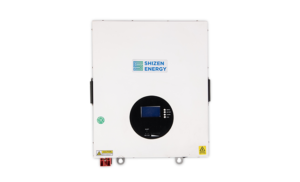
How Does a Lithium Inverter Battery Perform from Installation to End-of-Life?
A lithium inverter battery begins its life at 100% health and gradually declines over thousands of charge cycles. Instead of failing suddenly, capacity slowly reduces. With proper sizing and maintenance, users typically enjoy 10+ years of dependable backup power before needing replacement, especially with LiFePO4 batteries designed for long lifecycle performance.
Here’s the typical lifecycle journey of a lithium inverter battery in a home UPS, solar inverter, or ESS setup:
1. Installation & Commissioning (0–1 year)
- Battery installed with compatible inverter/solar inverter and BMS
- System configured for optimal charging voltage and Depth of Discharge (DoD)
- Early life performance is stable; battery operates at near 100% SOH.
2. Stable Performance Phase (1–7 years)
- Battery delivers consistent backup power across thousands of partial cycles.
- Capacity loss is gradual—typically 1–2% per year in normal conditions.
- For well-sized systems, backup power hours remain almost unchanged for several years.
3. Gradual Degradation Phase (7–12+ years)
- SOH slowly reduces to 80–70% of original capacity.
- Backup duration may be slightly shorter, especially under heavy loads.
- Still usable, but for critical backup needs, users start planning inverter battery replacement.
4. End-of-Life & Replacement (10–15 years, depending on usage)
- Battery continues working but no longer meets required backup duration or load.
- Replacement becomes more economical than continued maintenance or performance compromises.
- Shizen Energy’s technical team can help assess SOH and recommend optimal replacement timing.
Which Factors Most Strongly Influence Lithium Inverter Battery Life?
Key drivers of lithium inverter battery life include cycle life, depth of discharge, charging habits, operating temperature, and usage patterns. Frequent deep discharges, high temperatures, and aggressive fast charging accelerate battery degradation, while moderate DoD, good ventilation, and proper system sizing help extend the lithium battery lifespan in years.
5. Cycle Life & Depth of Discharge (DoD)
- A cycle is one full charge–discharge event.
- Lithium batteries deliver more cycles when operated at 50–80% DoD instead of 100%.
- Example:
- 100% DoD → ~3,000 cycles
- 80% DoD → ~4,000–5,000 cycles
- 50% DoD → ~6,000+ cycles
6. Charging Habits & Fast Charging
- Regular or fast charging overcharging heats the battery, reducing SOH.
- Proper charging profiles set by the Battery Management System (BMS) protect cells and enhance lifespan.
- Avoid repeatedly draining the battery to 0% and then charging fully.
7. Operating Temperature
- Ideal operating range is typically 15–35°C.
- High ambient temperatures common in India can accelerate degradation if the battery is in an unventilated space.
- Shizen Energy designs inverter battery solutions with thermal considerations for Indian climates.
8. Usage Patterns & Load Profiles
- Constant heavy load (e.g., commercial equipment) stresses batteries more than light, intermittent household loads.
- Solar-integrated systems with intelligent charge management can extend life by avoiding extreme DoD daily.
9. Battery Chemistry & BMS Quality
- LiFePO4 batteries are known for higher cycle life and thermal stability compared to conventional lithium-ion batteries.
- A high-quality smart BMS actively monitors cell voltage, temperature, and current, preventing damage.
How Do Lithium Inverter Battery Lifespans Compare to Lead-Acid Batteries?
Compared to lead-acid inverter batteries, a lithium inverter battery typically delivers 2–4 times more cycles and much longer usable lifespan. While lead-acid may need replacement every 3–5 years, lithium solutions often last 8–12+ years, offering lower long-term cost and more reliable backup power for homes and businesses in India.
Here’s a simplified lifespan comparison:
| Parameter | Lithium Inverter Battery (LiFePO4) | Lead-Acid Inverter Battery |
|---|---|---|
| Typical cycle life | 3,000–6,000+ cycles | 500–1,200 cycles |
| Calendar life (real usage) | 8–15 years | 3–5 years |
| Recommended DoD for long life | 50–80% | 30–50% |
| Maintenance | Low (no topping up) | High (electrolyte checks, etc.) |
| Efficiency | 90–95% | 70–80% |
| ROI over 10 years | High | Moderate–Low |
This lithium vs lead-acid inverter battery comparison shows why many homeowners, small businesses, and solar users are upgrading to best lithium battery for inverter solutions from trusted manufacturers like Shizen Energy for long-term reliability.
How Many Years of Backup Power Can I Expect in Real Scenarios?
In typical Indian home and small business setups, a well-sized lithium inverter battery can provide reliable backup for 8–12 years under daily or frequent use. For solar-integrated systems with optimized charge cycles, lifespan can extend further. Commercial ESS and facility backup systems designed by experts often reach the upper range of lithium battery lifespan years.
Scenario 1: Household Backup Power (Home UPS + Solar Inverter)
- Daily minor outages + occasional long outages
- Approx. 300–400 cycles per year
- A 4,000-cycle battery at 80% DoD → ~10–12 years of service
Scenario 2: Small Business / Shop Backup
- Frequent use during power cuts, heavier load
- Approx. 400–600 cycles per year
- Same battery → ~7–10 years, depending on temperature and load management
Scenario 3: Commercial ESS / Facility Managers
- Controlled charging via Energy Storage System (ESS) with smart BMS
- Optimized DoD (40–60%), managed temperature
- Cycle life can translate to 10–15 years of planned service before replacement.
Shizen Energy works with dealers, electricians, builders, and facility managers to design inverter battery systems tailored to these realistic use cases rather than relying on generic brochure claims.
What Is the Total Cost of Ownership (TCO) of a Lithium Inverter Battery?
While lithium inverter batteries have a higher upfront price than lead-acid, their longer life, lower maintenance, and higher efficiency make the cost per year and cost per kWh delivered significantly lower. Evaluating total cost of ownership (TCO) instead of just purchase price helps buyers see the true ROI of Shizen Energy’s lithium inverter battery solutions.
Let’s look at an illustrative 10-year comparison for a typical home:
Lead-Acid Option
- Purchase cost: ₹15,000 per battery
- Lifespan: ~4 years → needs 2–3 replacements over 10 years
- Maintenance: Regular servicing + water topping
- Approx. total spend over 10 years:
- Batteries: ₹15,000 × 3 = ₹45,000
- Maintenance: ~₹1,000/year × 10 = ₹10,000
- Total ≈₹55,000
Lithium Inverter Battery Option (LiFePO4)
- Purchase cost: ₹35,000 (illustrative)
- Lifespan: ~10–12 years → no major replacement in 10 years
- Maintenance: Minimal, mainly visual checks and clean connections
- Higher efficiency saves energy and improves backup reliability
- Approx. total spend over 10 years:
- Battery: ₹35,000
- Maintenance: ~₹500/year × 10 = ₹5,000
- Total ≈₹40,000
Result:
Even though the lithium battery costs more initially, its total cost of ownership over 10 years is lower, with better performance and fewer disruptions. This is why businesses evaluating inverter battery replacement India are increasingly choosing Shizen Energy lithium inverter batteries for long-term ROI.
When Is It More Economical to Replace an Inverter Battery Than Maintain It?
Replacement is more economical when your inverter battery’s backup duration drops significantly, frequent maintenance is required, or SOH falls below about 70–80%. At this stage, performance issues, downtime, and hidden costs often exceed the price of a new battery, especially when upgrading to a long-life lithium inverter battery solution.
Signs that indicate replacement is better than prolonged maintenance:
- You’ve already serviced the battery multiple times within a year.
- Backup duration has reduced by 30–40% from the original performance.
- Voltage drops quickly under normal load.
- System alarms from the Battery Management System (BMS) become frequent.
- For lead-acid: visible sulfation, swelling, or repeated electrolyte issues.
Planning replacement with a long-life LiFePO4 inverter battery from Shizen Energy helps lock in predictable costs and performance for the next decade, especially for home UPS, solar inverter, and ESS applications.
Signs Your Inverter Battery Needs Replacement
Common signs include shorter backup time, frequent low-battery alarms, slow charging, unusual heating, or repeated inverter faults. If your battery is older than its rated lifespan or requires frequent maintenance, it’s time to consider inverter battery replacement—ideally with a durable lithium inverter battery designed for Indian conditions.
Checklist you can use at home or at work:
- Backup time has reduced drastically compared to initial performance.
- Battery doesn’t reach full charge even after sufficient charging hours.
- Inverter trips under normal loads that previously ran smoothly.
- Battery case feels unusually hot or shows physical deformation (critical).
- Age exceeds 3–5 years for lead-acid or 10–12 years for lithium.
- Electricians or service technicians consistently recommend replacement.
If you’re experiencing several of these issues, it’s likely more economical to upgrade to a new Shizen Energy lithium inverter battery rather than continuing with an underperforming battery.
What Maintenance Best Practices Help Maximize Lithium Inverter Battery Life?
To maximize lithium inverter battery life, maintain proper ventilation, avoid extreme temperatures, keep DoD moderate, and ensure the inverter or solar charger is correctly configured. Regular inspections of terminals, firmware, and BMS status help protect the battery and extend its lithium battery lifespan in years for home and commercial backup applications.
Maintenance checklist:
- Install batteries in a cool, ventilated, dust-free area.
- Avoid exposure to direct sunlight or high ambient heat near generators or machinery.
- Ask your electrician or dealer to configure inverter/solar charger settings for lithium chemistry.
- Do not routinely discharge the battery to absolute zero; keep DoD within recommended range.
- Check terminals for corrosion and loose connections periodically.
- Monitor BMS logs or indicators for warning signs.
- Follow Shizen Energy’s battery care guide and warranty instructions for servicing intervals.
Lithium batteries are far lower maintenance than lead-acid, but simple good practices significantly extend their service life.
Common Myths vs Facts About Lithium Inverter Battery Life
Many myths overestimate or underestimate lithium inverter battery life. Some claim lithium lasts “forever,” while others say it fails quickly in hot climates. In reality, modern LiFePO4 batteries with a smart BMS, like Shizen Energy’s solutions, deliver 8–15 years of reliable performance when sized and installed correctly, even in Indian conditions.
Myth vs Fact:
- Myth: Lithium batteries never degrade.Fact: All batteries degrade. Lithium simply degrades more slowly and more predictably than lead-acid.
- Myth: Fast charging always damages lithium batteries.Fact: Controlled fast charging designed into the system and managed by BMS is safe. Uncontrolled aggressive charging can cause degradation.
- Myth: Lithium cannot handle Indian heat.Fact: Proper installation, ventilation, and thermal design allow lithium inverter batteries to operate reliably across Indian climates.
- Myth: Higher Ah rating alone ensures longer life.Fact: Cycle life, DoD, BMS quality, and system design are more important for lifespan than capacity rating alone.
Lifespan Calculator Guide: How Can I Estimate My Lithium Battery’s Life?
You can estimate your lithium inverter battery life by multiplying the rated cycle life by your annual number of charge cycles, then cross-checking with the manufacturer’s calendar life. This simple approach helps homeowners and businesses plan battery replacement timelines and evaluate long-term ROI for backup power and solar inverter systems.
A simple rule-of-thumb:
10. Estimate daily usage:
- Example: One meaningful discharge per day → ~365 cycles/year.
11. Check rated cycle life:
- Example: 4,000 cycles at 80% DoD.
12. Calculate years of service:
- 4,000 ÷ 365 ≈ 11 years (under ideal conditions).
13. Adjust for real conditions:
- High temperatures, deeper discharge, and heavy loads may reduce this to around 8–10 years.
Shizen Energy can help you create a customized lifecycle chart and replacement plan based on your exact load profile and backup needs.
FAQ: Lithium Inverter Battery Life
Most quality lithium inverter batteries last 8–12 years, and premium LiFePO4 batteries can reach 12–15 years with proper sizing and installation. Actual lifespan depends on cycle count, DoD, temperature, and charging habits.
Yes. Lithium offers longer life, higher efficiency, lower maintenance, faster charging, and better ROI. While lead-acid may need replacement every 3–5 years, lithium often provides stable backup for a decade or more.
If your battery is old, backup time has dropped considerably, and maintenance or service calls are frequent, it’s time to plan inverter battery replacement. For critical loads, replacement is recommended when SOH falls below about 70–80%.
Frequent deep discharges and high loads reduce cycle life. However, lithium batteries are designed for regular use. With appropriate DoD and well-designed systems, daily usage still supports many years of dependable service.
Absolutely. Lithium batteries are ideal for solar inverter and energy storage systems (ESS), thanks to their high efficiency, deep DoD capabilities, and long cycle life. Shizen Energy offers lithium solutions optimized for solar integration.
Why Choose Shizen Energy for Long-Life Lithium Inverter Batteries?
Shizen Energy India combines advanced LiFePO4 battery technology, smart BMS, and robust design tailored for Indian homes and businesses. As a leading lithium battery manufacturer for energy storage systems, Shizen delivers durable, high-performance inverter battery solutions with strong warranties, technical support, and long-term ROI for backup power and solar users.
Shizen Energy’s strengths for inverter applications include:
- Proven expertise in Energy Storage System (ESS), home UPS, and commercial backup power.
- High-quality LiFePO4 lithium inverter batteries with long cycle life and stable performance.
- Smart Battery Management Systems for safety, longevity, and real-time monitoring.
- Products designed for Indian voltage conditions, temperatures, and usage patterns.
- Support for dealers, electricians, facility managers, and distributors with technical guidance and warranty-backed solutions.
Ready to Plan Your Long-Term Inverter Battery Investment?
If you’re a homeowner, small business owner, solar system user, dealer, electrician, builder, facility manager, or battery distributor evaluating lithium inverter battery life and long-term ROI, Shizen Energy can help you:
- Select the best lithium battery for inverter for your load profile.
- Design a lifecycle and replacement plan tailored to your backup needs.
- Understand warranty coverage, battery care guides, and maintenance schedules.
Contact Shizen Energy India today for expert advice on choosing the right lithium inverter battery solution that delivers years of dependable backup power and a strong return on investment.