Introduction
Why LFP Batteries Are Winning in India’s Heat: 2026 Chemistry Trends Explained
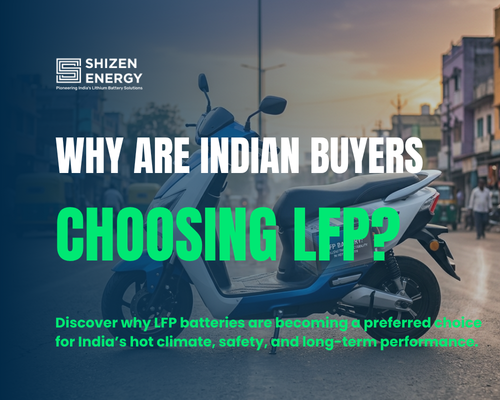
LFP batteries are gaining preference in India because they combine strong thermal stability, better battery safety, long cycle life, and reliable performance in hot operating conditions. For EVs, solar storage, telecom backup, and industrial applications, LFP battery for Indian climate use cases are increasingly attractive because they are built for durability, lower heat stress, and better long-term value than many higher-energy-density chemistries.
India’s battery market is changing fast, and the biggest shift is not just about capacity or price. It is about which chemistry survives heat, delivers consistent performance, and stays safe over years of use. For buyers, OEMs, solar installers, and fleet operators, that makes the comparison between Lithium Iron Phosphate Battery and other lithium-ion chemistries one of the most important decisions in 2026.
What makes India’s climate so challenging for batteries?
India’s operating environment is tough on batteries because high ambient temperatures, long operating hours, and fast charging demands can push cells and packs into stressful thermal conditions. When heat rises, battery aging accelerates, internal resistance can increase, and performance can decline faster than expected. In practical terms, this means shorter life, more downtime, and higher replacement cost for the buyer.
For applications like EV Battery systems, Solar Battery storage, Telecom Backup, and Energy Storage System deployments, the battery must do more than store energy. It must remain stable in heat, manage charging safely, and deliver predictable output even when the weather is not ideal.
What is an LFP battery, in simple terms?
An LFP battery uses Lithium Iron Phosphate (LiFePO4) as the cathode material. Compared with many other lithium-ion battery chemistries, LFP is known for stronger thermal stability lithium battery performance, safer operation, and a longer usable life.
A simple analogy is this: if a battery chemistry is like a vehicle, some chemistries are built for speed, while LFP is built for endurance and reliability. That is why LFP is widely chosen for systems where safety, longevity, and climate resilience matter more than squeezing out the highest possible energy density.
How does LFP work in high heat?
LFP batteries are naturally more stable at elevated temperatures because the iron-phosphate structure is harder to destabilize than some alternative chemistries. In real-world use, that means the cell is less prone to dangerous heat escalation and better suited to India’s hot ambient conditions.
The most important idea is thermal runaway. This is the chain reaction where battery heat builds rapidly and can become dangerous. LFP chemistry is less likely to enter this state compared with some other lithium-ion formats, which is why it is often preferred in battery safety India discussions. That does not make LFP immune to abuse, but it does make it a safer foundation when paired with a well-designed Battery Management System (BMS).
Why is LFP considered better for India’s climate?
There are four main reasons buyers are moving toward LFP battery for Indian climate applications.
First, LFP offers better thermal stability, which matters in hot regions and enclosed installations. Second, it typically supports a longer cycle life, which means more charge-discharge cycles before meaningful capacity loss. Third, it is generally safer under thermal stress than many alternatives. Fourth, it provides more predictable long-term economics because replacement frequency is lower.
For businesses, that combination matters more than just the upfront purchase price. In India, the best battery is often the one that lasts longer, stays safer, and reduces unplanned maintenance.
How does LFP compare with NMC batteries?
Here is a simple buyer-focused comparison of LiFePO4 vs lithium ion chemistry choices, especially when heat is a major concern.
| Factor | LFP Battery | NMC Battery |
|---|---|---|
| Heat tolerance | Strong | Moderate |
| Thermal stability | Very high | Lower than LFP |
| Safety profile | Better | Needs tighter controls |
| Cycle life | Typically longer | Typically shorter in hot use |
| Energy density | Lower | Higher |
| Best use cases | Solar storage, fleet, telecom, industrial backup | High range EVs, compact applications |
| Long-term value in heat | Strong | More sensitive to temperature stress |
This is why many engineers and buyers prefer Lithium Iron Phosphate Battery systems when the priority is safety, durability, and life in Indian conditions rather than maximum compactness.
Does LFP charge slower than other chemistries?
Not necessarily in a way that matters for most commercial buyers. LFP supports fast charging when the pack design, charger, and BMS are properly engineered. The real issue is not whether it can charge quickly, but whether it can do so repeatedly without excessive heat buildup.
For fleet operators and OEMs, the better question is: Can the battery fast-charge safely every day in Indian temperatures? In many cases, the answer is yes for LFP when the system is designed well. That makes it a practical choice for EV Battery platforms and energy storage systems where uptime is critical.
Why do solar installers prefer LFP for storage projects?
Solar EPC companies and installers increasingly choose LFP because solar storage is a long-duration application. The battery is expected to charge during the day, discharge in the evening, and repeat this pattern for years. That means cycle life and heat tolerance matter more than flashy specs.
LFP batteries work well in Solar Battery and ESS environments because they are stable, dependable, and easier to justify over the full project lifecycle. For single phase lithium battery and three phase lithium battery systems, the chemistry should support long-term operational continuity, not just initial performance.
Where is LFP being used in India?
LFP is increasingly used across electric mobility, renewable energy, and industrial backup applications. In the mobility segment, it supports Golf cart lithium battery, erickshaw lithium battery, E scooter lithium battery, and E-boat lithium battery manufacturers use cases because of the need for safety and reliable daily cycling.
In industrial applications, LFP is widely relevant for Fork lift lithium battery, Scissors lift lithium battery, Stacker Lithium battery, Tow truck lithium battery, and Automated guided vehicle lithium battery systems, where uptime and durability are more important than light weight alone.
For telecom and backup systems, its stability and long service life make it especially practical where maintenance access may be limited.
Is LFP the safest lithium battery option?
No battery chemistry is risk-free, but LFP is widely recognized for a stronger safety profile than many other lithium-ion options. That is mainly because it is more thermally stable and less likely to escalate rapidly under stress.
Still, safety depends on the whole system, not just the chemistry. A high-quality BMS, proper enclosure design, correct charging profile, good thermal design, and compliance with BIS Certification and IEC Standards all matter. A well-engineered battery pack from a trusted manufacturer is always safer than a poorly designed pack, even if the chemistry is theoretically strong.
What are the main myths about LFP batteries?
One common myth is that LFP batteries are “old” or “less advanced.” In reality, LFP has become a preferred chemistry in many markets because it solves the exact problems buyers face in hot climates: safety, longevity, and stable performance.
Another myth is that all lithium batteries behave the same. They do not. Chemistry changes the way a battery manages heat, degradation, and charging stress. A third myth is that LFP is only for low-end products. In fact, it is now a leading choice for premium systems where reliability and lifecycle value are more important than compact size.
Which battery should you choose?
If your application demands maximum compactness and high energy density, another chemistry may still be considered. But if your priority is best battery for hot climate, safer operation, lower degradation, and better long-term economics, LFP is usually the stronger option.
A simple decision framework looks like this: choose LFP when heat, safety, long life, and predictable operation matter most. Choose another chemistry only when space and weight are the primary constraints and the system has advanced thermal controls.
What should buyers look for before purchasing?
Buyers should evaluate more than just advertised capacity. A battery should be judged on chemistry, thermal design, BMS quality, certifications, warranty terms, and application fit. This is especially important for fleet operators, OEMs, and industrial buyers who depend on uptime.
Here is a practical checklist:
- Confirm the chemistry is truly LFP / LiFePO4 .
- Ask about the Battery Management System (BMS) and its protections.
- Check test data for high temperature performance .
- Review cycle life at realistic operating conditions.
- Ask for BIS Certification and relevant IEC Standards .
- Evaluate expected maintenance needs and support.
- Compare lifecycle cost, not only upfront price.
How does Shizen Energy fit into this shift?
As a manufacturer focused on lithium battery pack solutions, Shizen Energy is positioned in a market where climate readiness matters as much as product performance. For buyers evaluating Made in India Batteries, the real advantage is not only local manufacturing but also climate-aware engineering, application-specific pack design, and dependable support for diverse use cases.
Shizen Energy’s relevance extends across EV Battery, Solar Battery, Energy Storage System, and industrial battery applications. That includes systems for electric mobility, renewable energy storage, telecom backup, and material handling equipment where heat resilience and battery safety are essential.
Why is lifecycle value more important than upfront cost?
A cheaper battery that fails early often becomes the most expensive one. In heat-heavy markets, replacement frequency, downtime, safety incidents, and lost productivity can quickly outweigh initial savings. That is why lifecycle value has become central to battery buying decisions.
LFP helps improve lifecycle economics because it generally lasts longer under repeated cycling and handles heat better. For fleet operators and solar installers, that can mean fewer replacements, better project economics, and more predictable performance over time.
What are the biggest 2026 chemistry trends in India?
The 2026 trend is clear: buyers are moving toward safer, longer-lasting chemistries that can handle India’s climate. LFP is increasingly the default choice for many storage and fleet applications, while more heat-sensitive chemistries remain limited to specific use cases.
The second trend is integration. Buyers no longer want only a battery; they want a complete energy solution with BMS intelligence, thermal protection, certification readiness, and lifecycle support. The third trend is application specificity. A battery for a golf cart, e-scooter, solar inverter, or forklift is no longer chosen the same way. The chemistry must match the use case.
What should the buyer remember?
If you are choosing a battery for India, start with climate, not just capacity. Heat changes everything. The strongest LFP battery for Indian climate deployments are those built around safety, stability, and long-term performance. For many EV, solar, telecom, and industrial buyers, LFP is becoming the most practical and future-ready choice.
Shizen Energy’s role in this market is to support those decisions with high-performance lithium battery solutions designed for India’s real operating conditions.
FAQs:
LFP Batteries, Heat, and Battery Chemistry
In many applications, yes. LFP generally offers stronger thermal stability and better safety in high temperatures, which makes it a strong choice for hot climates and long-duty cycles.
Because it balances safety, long cycle life, and dependable operation. That makes it especially useful for electric vehicles, backup power, and renewable energy storage.
It needs less maintenance than many traditional battery systems, but it still requires proper charging, a quality BMS, and correct thermal design for best results.
It is generally a safer chemistry, but enclosure design, ventilation, and certification standards still matter. Safety comes from the full battery system, not chemistry alone.
The main trade-off is lower energy density compared with some other lithium-ion chemistries. That means it may be larger for the same stored energy, but it usually offers better life and safety.